
Marine CRM Automation Review for Yacht Brokers
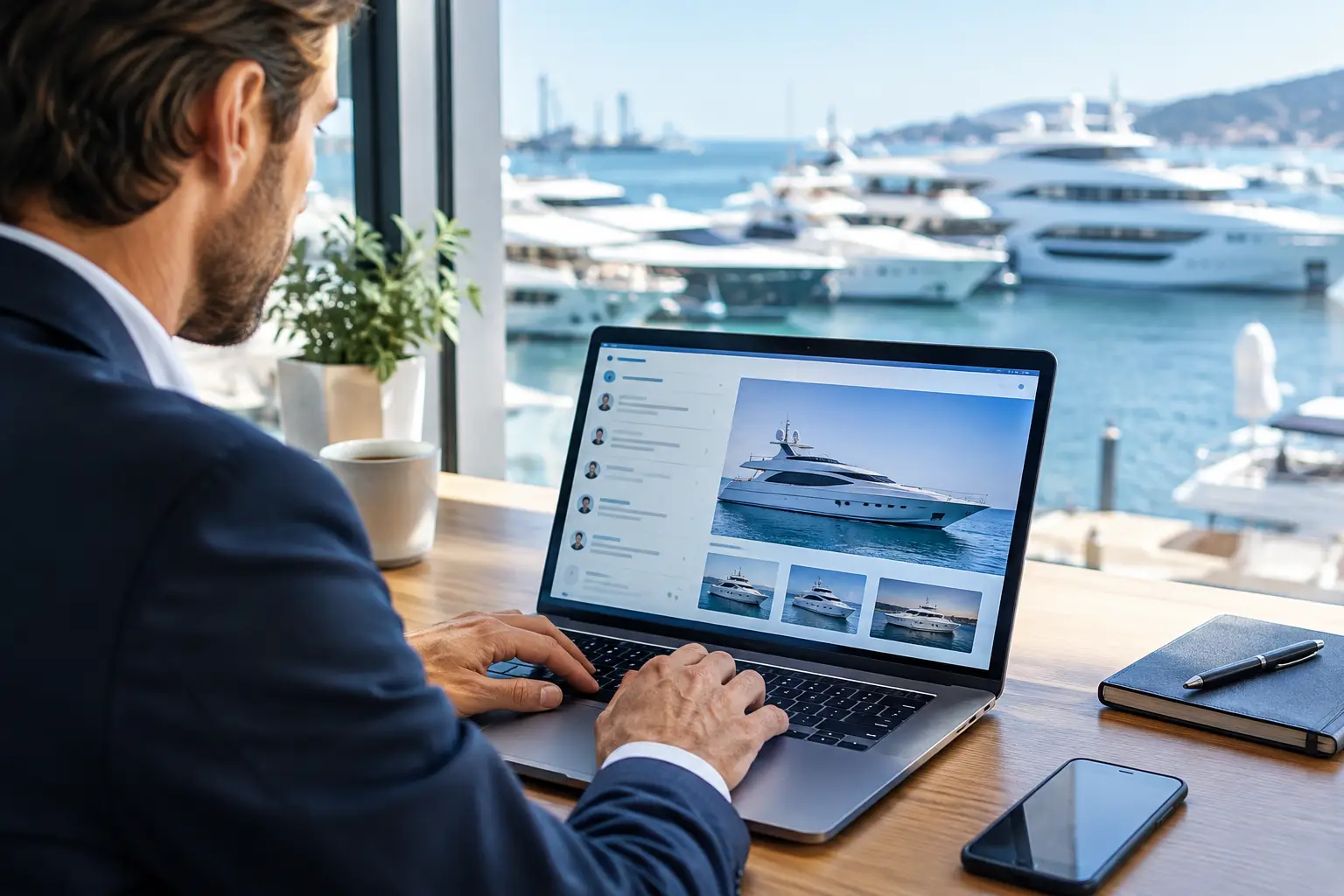
A marine CRM automation review should start where a yacht deal usually gets messy: the moment one inquiry turns into a viewing, a negotiation, a contract, and a stream of messages spread across inboxes and spreadsheets. For a broker managing multiple listings, the question is not whether automation saves a few minutes. It is whether it keeps the right buyer, boat, and next action connected from first contact to closing.
Generic CRM software can store names and send emails. Yacht brokerage needs more. A serious system has to account for listings that change often, buyers who may be considering several vessels, co-brokerage relationships, seasonal charter activity, and transactions that require documents to move quickly. The best automation supports that work without making the team rebuild its process around generic fields and workarounds.
What to Assess in Marine CRM Automation
The most useful way to review a marine CRM is to follow an active listing through the platform. Start with the boat record. If listing data lives separately from the contact database, calendar, documents, and marketing channels, staff will still be copying information between tools. Automation will simply be layered on top of fragmented data.
A boat-centered workflow changes that. The listing should be the working record where a broker can see specifications, media, pricing history, inquiries, buyer matches, viewings, emails, offers, and transaction documents. When a price changes or new photos are added, that update should flow to the places where the listing is published. The broker should not have to remember which portal, website, or partner received the old information.
This matters because inaccurate listings cost more than time. A buyer who sees conflicting prices or outdated equipment details loses confidence quickly. A co-broker working from an old version may waste time qualifying a client for a vessel that is no longer available. Centralized data prevents those small, expensive breakdowns.
Lead Capture Must Create a Usable Record
Many systems claim to capture leads, but the detail matters. An incoming inquiry should create or update a contact automatically, attach the conversation to the relevant boat, record its source, and make the next step visible. If an assistant has to manually create the contact after every web form or email, the process still depends on memory.
Look for a CRM that preserves context. A buyer asking about a 60-foot sportfishing yacht should not enter the database as a blank name with an isolated email thread. Their interest, budget signals, location, trade-in situation, and requested viewing date should be available to anyone on the team who needs to move the opportunity forward.
Email synchronization is particularly valuable here. It keeps the conversation attached to the client and the vessel rather than buried in one broker's inbox. That becomes essential when a colleague covers a weekend showing or takes over a negotiation while the original broker is traveling.
Follow-Ups Should Be Timely, Not Mechanical
Automated follow-ups are one of the clearest tests of whether a CRM fits yacht sales. A good system can trigger a response after an inquiry, remind a broker to call after a viewing, and surface leads that have gone quiet. But automation should not turn a high-value purchase into a chain of generic messages.
The strongest approach combines automatic timing with broker judgment. A prospect who downloads specifications may need a prompt acknowledgment and a relevant alternative if the boat is unavailable. A serious buyer who has toured the vessel needs a personal call, followed by a note that reflects what was discussed onboard. The CRM should handle the reminder and recordkeeping so the broker can handle the relationship.
Set rules around real events: a new inquiry, a scheduled viewing, a price adjustment, an offer deadline, or a period of inactivity. Avoid building elaborate sequences just because the software allows them. If the team cannot explain why a message goes out at a particular moment, it probably should not be automated.
Listing Distribution Is Part of CRM Performance
For marine professionals, CRM automation cannot be separated from listing distribution. The listing is often the source of the lead, and every change to that listing affects the accuracy of future conversations. A platform that requires duplicate entry into several publishing channels creates avoidable risk.
In a practical review, test how the system imports a listing and how it publishes updates. Can a broker import from an existing website, CRM, or API? Does one change update the broker's own site and connected partner channels? Can the team clearly see whether a listing is active, pending, sold, or withdrawn across its distribution network?
This is where a yachting-specific system such as EasyMLS has a meaningful advantage over a generic CRM. It combines the listing workflow, distribution, customer records, buyer matching, calendar activity, and transaction documents in one place. The point is not to collect more features. It is to remove the handoffs that cause duplicate work and missed follow-ups.
Buyer Matching Should Give Brokers a Head Start
A CRM should do more than wait for a buyer to find a boat. It should help brokers identify suitable inventory when a new client comes in or when a listing changes price. That may include matching against a broker's own stock and appropriate vessels within a private professional network.
The quality of matching depends on the data being current. Length, builder, year, price range, location, draft, cabin layout, usage, and buyer preferences all matter, but not every deal is defined by filters alone. A family moving up from a day boat and an owner planning long-range cruising may have the same budget while needing very different recommendations.
Use automated matching to create a shortlist, then apply broker knowledge. The CRM should make the relevant options easy to find and document, not pretend that a formula can replace a conversation about how the client actually plans to use the boat.
Review the Transaction Workflow, Not Just the Sales Funnel
A lead does not disappear from the workload once the buyer says yes. The team still needs to coordinate documents, invoices, deposits, dates, and communication between parties. If those tasks move into disconnected accounting software, document folders, and email threads, the CRM view of the deal becomes incomplete at the point when precision matters most.
A better workflow lets a broker generate sales contracts and invoices directly from the boat and client records. Details already captured in the system can populate the documents, reducing repeated typing and the chance of entering inconsistent information. The broker can then keep the document history and related communications tied to the transaction.
This does not mean every brokerage will follow the same workflow. Larger firms may have internal approval steps or separate finance processes. Independent brokers may want a simpler path from offer to invoice. The platform should support both without forcing the team to maintain duplicate records.
Co-Brokerage Requires Controlled Visibility
Marine sales often depend on professional relationships beyond one office. A private MLS can help brokers share inventory and identify opportunities without exposing sensitive details in the wrong context. In a CRM review, consider how the system handles access, ownership, activity history, and shared opportunities.
The practical question is simple: can you collaborate without losing control of your data? A co-broker should be able to work from accurate listing information and respond efficiently, while the listing broker retains a clear record of the relationship and the deal's progress. Notes, viewings, and communications need enough structure that a handoff does not become a guessing game.
For charter businesses, the same principle applies. Availability, client preferences, requests, and follow-up dates need to remain connected. Charter activity can move faster than a sales cycle, so automation should reduce response delays while keeping the client experience personal.
Questions to Ask Before You Commit
Before choosing a system, ask your team to run a real-world test rather than reviewing a feature checklist alone. Import a live boat, update its price, capture an inquiry, schedule a viewing, send a follow-up, match the buyer to alternatives, and create the documents you would normally need for the deal. The gaps will become obvious quickly.
Also ask who will maintain the data. Automation only works when the underlying records are trusted. If agents avoid updating contacts because the process is slow, or if listings are edited in multiple places, no workflow rule will fix the problem. The right platform makes the correct action the easy action.
A marine CRM earns its place when it gives brokers more time in front of buyers and less time reconciling records. Choose the system that keeps the boat, the client, the conversation, and the next action together - then let your team spend its attention where it closes deals.